TB-500
No human data for the fragment sold as TB-500.
defines TB-500 as a seven-amino-acid fragment of thymosin beta-4, a 43-amino-acid protein involved in cell movement and repair. Sellers also use the name for the whole protein. Every human trial used the full-length protein. A , also called Thymosin beta-4 fragment and Tβ4 fragment.
What the evidence shows
Side effects and risks
Who should avoid it: Anyone with a history of cancer, and athletes.
Athletes: Prohibited at all times (class S2). Thymosin beta-4 and its derivatives, including TB-500, are named on the list. USADA advisory on 2027 WADA list, 2026-10
How it works
- Where it acts
- Thymosin beta-4 binds actin, the protein cells use to move.
- What it changes
- In animal and cell studies, cells move into wounds faster and new blood vessels form.
- What people notice
- Human trials used the full protein, as eye drops and wound gels. The TB-500 fragment has no human data.
How it has been given in studies
No established human dose for TB-500. Trials of the parent protein used 0.1% eye drops five times a day for four weeks.
Getting it in the United States
The legal route for TB-500
Not FDA-approved. FDA advisers have reviewed, or are due to review, whether pharmacies may compound it. Until FDA acts, there is no lawful route. Vials sold for research use are unapproved drugs when marketed for people.
Routes people use for any peptide in the United States
Telehealth prescribing
Online clinics prescribe after a questionnaire, sometimes with no live doctor visit, and mail the drug. FDA moved in February 2026 to restrict mass-marketed compounded copies and claims that they are generic equivalents.
Risk: Thin medical screening. Compounded versions are not reviewed by FDA for quality.
Covers: Approved GLP-1 drugs, compounded semaglutide and tirzepatide
Source: GZERO Media, Apr 2026
Clinical trial enrolment
The only lawful way to get an unapproved peptide drug with medical monitoring. ClinicalTrials.gov lists eligibility, sites and phone numbers. Researchers note recruitment is hard when people can buy the drug on the gray market instead of risking placebo.
Risk: Possible placebo assignment, strict eligibility and travel to a study site.
Covers: Investigational peptide drugs still in development
Source: NIH, finding a clinical trial
Online research-chemical sellers, some compounders
Sold online as a research chemical without quality controls. Not FDA approved. The 2026 panel vote does not allow compounding until rulemaking finishes.
Source: BSCG, 2026-02
Routes people use for any peptide in the United States
Compounding pharmacy with prescription
A clinician prescribes and a pharmacy compounds. Twelve peptides left the FDA do-not-compound category in April 2026 and a panel backed six in July, but they are not yet formally eligible. Pharmaceutical-grade ingredient is scarce.
Risk: Legal status is unsettled until FDA rulemaking ends. Pharmacies may use research-grade ingredient.
Covers: BPC-157, TB-500, KPV, MOTS-c, Semax, Epitalon and similar
Source: Frier Levitt, Apr 2026
Med spas and weight-loss clinics
Very common. Secret shoppers called 75 clinics and med spas in two states after shortages ended. 92 percent offered compounded semaglutide and 87 percent tirzepatide, often mixed with B vitamins to look custom.
Risk: Four of 23 suppliers lacked sterile compounding licenses and four had disciplinary records.
Covers: Compounded semaglutide and tirzepatide
Source: American Med Spa Association on JAMA Health Forum study, Jul 2026
Concierge and longevity doctors
Cash-pay physicians build peptide plans for wealthy clients. Reporting from San Francisco says some source from overseas channels, domestic research-use-only sellers or the few compounding pharmacies that will supply clinicians.
Risk: A doctor's involvement does not guarantee a pharmaceutical-grade product.
Covers: BPC-157, thymosin alpha-1, Selank, Semax, CJC-1295, ipamorelin, retatrutide
Source: San Francisco Standard, Sep 2025
Cross-border purchase or import
FDA says importing drugs for personal use is illegal in most cases but it may not object to small personal quantities in limited situations. Reporting also describes people travelling to Mexico for injections.
Risk: Packages can be seized. Product origin and cold-chain handling are hard to check.
Covers: Approved prescription peptides sold abroad
Source: FDA, personal importation
Routes people use for any peptide in the United States
Research-chemical websites
Sites sell vials marked for research or not for human consumption, with no prescription. FDA says some ship direct to consumers with dosing directions, and it has sent warning letters. Retatrutide exists only through this route or trials.
Risk: Unknown identity, strength and sterility. No pharmacist or prescriber involved.
Covers: Retatrutide, semaglutide, tirzepatide, BPC-157 and most unapproved peptides
Source: FDA, unapproved GLP-1 drugs page
Direct orders from Chinese factories
Buyers message factory sales agents and pay by crypto or payment app. A minimum order of about ten vials pushes people to buy in bulk and share. A blockchain analysis found US buyers were the largest source of funds.
Risk: Many of the same vendors list fentanyl precursors. Lab reports sent by sellers cannot be verified.
Covers: GLP-1 copies, melanotan II, BPC-157, TB-500, GHK-Cu, epitalon
Source: TRM Labs, Oct 2026
Chat groups and social sellers
Dealers are found through Telegram, WhatsApp, Discord and influencer discount codes. In a May 2026 survey of 1,000 US users, 14.5 percent bought this way and three quarters asked an AI chatbot for dosing.
Risk: 45 percent of social media buyers in that survey reported an emergency or urgent care visit for a reaction.
Covers: Retatrutide and other research-use-only peptides
Source: The Ethos, May 2026
This describes what people do. It is not advice. The decision is yours.
What users report
Recurring themes in public forum posts, unverified and with no comparison group.
Reported benefits
- Used with BPC-157 for stubborn injuries
- Looser, less stiff joints
Reported problems
- Lethargy and head rush after injecting
- Little effect on its own
Almost always taken in a stack, so nobody can tell which product did what.
More contextCase reports, what public figures say, videos and articles, when options run out and the chemistry
Case reports
From journals, regulators and studies of users. One case proves little.
Mixed resulttrial result in rare group - 18 people - 2023
Phase 3 eye-drop trial of full-length thymosin beta-4 in neurotrophic keratopathy stopped early for slow enrolment. Six of 10 treated eyes healed versus one of eight on placebo. The main endpoint missed significance.
Source: HCPLive, 2023-01
Harm reportednews-reported case - 1 person - 2025
A US triathlete accepted a four-year ban in 2025 for possessing and using TB-500 and BPC-157 and for promoting peptides to followers. A whistleblower tip started the inquiry.
Source: USADA, 2025-09
Harm reportednews-reported case - 1 person - 2025
New Zealand customs intercepted a parcel of TB-500 and other peptides addressed to an athlete. He said they were for another person's injury and received a three-year ban for trafficking.
Australian football players banned over thymosin beta-4
Harm reportednews-reported case - 34 people - 2016
The Court of Arbitration for Sport found that 34 Australian football players were injected with thymosin beta-4 during a 2012 club program. Players kept no records, were told to keep it confidential and the club doctor was left out. All missed the 2016 season. No health harm was documented.
Source: ABC News Australia, 2016
What experts and influencers say
Paraphrased from the linked sources.
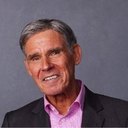
Calls the craze unfounded. He found no randomized human trial showing the advertised benefits for any of the unapproved peptides he reviewed, and warns about stacking several at once. He points to animal work in which TB-500 sped up dormant tumor growth and to a theoretical cancer concern with growth-hormone peptides and BPC-157. He treats the GLP-1 drugs as the well-studied exception.
Source: Eric Topol, "The Peptide Craze", Jul 2025, Associated Press, Nov 2025
Eric TopolWebsiteWarns against
Recommended by a reported 8-6 vote that TB-500 be allowed in pharmacy compounding for wound healing, against the advice of FDA staff scientists.
FDA Pharmacy Compounding Advisory CommitteeSourceRecommends
Money: Reuters reported six members work with peptide clinics

Devoted a full episode in 2024 to how these peptides are thought to work and how people use them. He presents possible benefits for healing, growth hormone, sleep and libido, and also says most of the data comes from animals, that black-market products may be contaminated, and that anyone with a tumor or cancer concern should avoid peptides that promote growth or new blood vessels.
Source: Huberman Lab episode, 1 Apr 2024
Andrew HubermanInstagramMixed view

Designed a heart attack trial of thymosin beta-4 and is concerned about easing limits on a related fragment before trials finish, stressing that drugs can cause harm.
Deepak SrivastavaWebsiteWarns against
Photo source: gladstone.org

As corresponding author of the eye-drop trial of full-length thymosin beta-4, wrote that the data suggest a meaningful healing difference that a larger study may confirm.
Source: HCPLive, 2023-01
Hynda KleinmanWikipediaRecommends
States it found no human exposure data for the TB-500 fragment and lacks key safety information. Flags immune-reaction risk from aggregation and impurities.
Source: FDA, 2026-04
US Food and Drug AdministrationSourceWarns against
Announced plans to run two phase 3 neurotrophic keratitis trials at once in the US and Europe to speed development of the eye drops.
Source: Ophthalmology Times, 2022-07
J.J. FinkelsteinSourceRecommends
Money: Heads the company developing the eye drops

Voted no at the meeting and said she feared the panel was answering market-driven demand, not solid science.
Source: Black Health, 2026-07
Elizabeth RebelloWebsiteWarns against
Photo source: asameetingnewscentral.com

Ahead of the July 2026 FDA advisory meeting, said his group wants guard rails so peptides can be compounded lawfully.
Source: Bloomberg Law, Jul 2026
Lee RosebushWebsiteRecommends
Photo source: pepmed.org

Led a literature review of BPC-157 and concluded it should not be used in people. On a science podcast said animal data look strong but human trials are nearly absent.
Source: STAT / Undark, Feb 2026
Flynn McGuireWebsiteWarns against
Photo source: medicine.utah.edu

Argued the first question for FDA is whether these peptides have been shown safe and effective, not how much demand exists.
Source: Bloomberg Law, Jul 2026
Photo source: home.ecri.org
Its advisory on the 2027 list says peptides are now named in the non-approved class. It lists BPC-157, TB-500, AOD-9604, GHRPs, ipamorelin and thymosin beta-4 and urges caution with any unnamed peptide.
Source: USADA athlete advisory, 2026-10
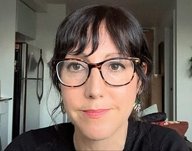
Reported on people who say BPC-157 and related peptides left them with lasting symptoms, and found their accounts are drowned out by the medical freedom push to widen access.
Amy MaxmenWikipediaWarns against
Photo source: Amy Maxmen / CC BY 3.0

Said influencers and politics, not good science, drive peptide demand. Called a US advisory vote to ease compounding limits frustrating and hoped Health Canada would follow the science.
Source: CTV News via CP24, 2026-07
Timothy CaulfieldWikipediaWarns against

Hosted an episode on grey-market injectable peptides with a journalist and an Imperial College peptide researcher. It asked how unregulated compounds won a following among biohackers and what they may do in the body.
Madeleine FinlayWebsiteMixed view
Photo source: madeleinefinlay.com

As an Enhanced Games recruit he listed testosterone, BPC-157, CJC-1295, ipamorelin and thymosin as substances he was using in 2025.
Source: Wikipedia, Enhanced Games, 2025
James MagnussenWebsiteRecommendsSays they used it
Money: Paid Enhanced Games competitor
Photo source: abc.net.au
Says thymosin beta-4 is banned at all times, no medical exemption would be granted, and there is serious concern it may promote growth and spread of cancer cells.
Source: Sport Integrity Australia, 2026
Sport Integrity AustraliaSourceWarns against

Publicly acknowledged in 2013 that he was given AOD-9604 in the club program. Later one of 34 players banned over thymosin beta-4. In November 2016 the AFL Commission ruled him ineligible for his 2012 Brownlow Medal and awarded it jointly to two other players.
Source: Wikipedia, Essendon supplements saga, 2016
Jobe WatsonInstagramMixed viewSays they used it
Fronted a college warning on injectable peptides. Said online promotion does not make a product safe, regulated or medically suitable. The college noted research peptides may never have been assessed by the MHRA.
Source: Aesthetics Journal, May 2026
Sadie Van Sanden CookeSourceWarns against
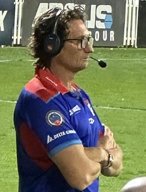
Coach during the 2012 injection program. The AFL suspended him from any football club role for 12 months from August 2013, as part of agreed penalties over governance failures. Fought the joint investigation in court and lost. Resigned in 2015.
Source: Wikipedia, Essendon supplements saga, 2015
James HirdWikipediaMixed view
Photo source: Totallynotarandomalt69 / CC BY-SA 4.0
Told the public not to buy or use peptides sold online. Reported serious cases with hospital stays, notably after retatrutide. Ordered several products presented as GLP-1 drugs off the market in July and August 2026.
Source: ANSM, Jul 2026

Told AFP that many of these molecules have never been tested in humans and that self-experiment stories shared online carry no scientific weight.
Source: Sud Radio / AFP, Aug 2026
Armelle RancillacWebsiteWarns against
Photo source: college-de-france.fr

Wrote that the 2026 French alert goes beyond the GLP-1 fakes flagged in 2025, and that some products are passed off as food supplements or carry research-only labels that buyers should not trust.
Source: Vidal, Jul 2026
Irene DrogouWebsiteWarns against
Photo source: lequotidiendumedecin.fr
Told the public not to inject peptides bought online. Said unauthorized products are illegal, unproven and may cause organ damage, clots or tumour growth. A research-use-only label does not make them legal.
Source: Health Canada advisory, 2026-04
Health CanadaSourceWarns against

Wrote that human evidence for BPC-157 amounts to three tiny reports. Called self-injection of online peptides high-risk, uncontrolled self-experimentation and asked for blinded placebo-controlled trials.
Stuart PhillipsWebsiteWarns against
Photo source: science.mcmaster.ca
Told readers that many online peptides are not authorized in Canada. Noted BPC-157 was tested mainly in animals. Advised checking for a Drug Identification Number.
Source: ScienceUpFirst, 2026-08
ScienceUpFirstSourceWarns against
Issued show-cause notices to 34 Essendon players over thymosin beta-4 in 2014. Did not pursue AOD-9604 use before April 2013 because its status had been unclear.
Source: Wikipedia, Essendon supplements saga, 2016
Australian Sports Anti-Doping AuthoritySourceWarns against
The AFL fined the club 2 million Australian dollars and barred it from the 2013 finals over its 2012 injection program. Thymosin beta-4 was the banned substance at the centre. AOD-9604 was also given to players.
Source: Wikipedia, Essendon supplements saga, 2013
Essendon Football ClubSourceWarns againstSays they used it
The Court of Arbitration for Sport found all 34 guilty of using thymosin beta-4 and gave two-year bans backdated to March 2015. It said they kept the injections secret and never checked the substance.
Source: ABC News, 2016-01
34 Essendon playersSourceWarns againstSays they used it
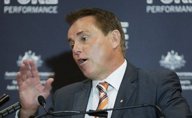
After the ruling described the Essendon case as the worst self-inflicted damage by a club in Australian sport. Said responsibility for what enters the body stays with the athlete, not support staff.
Source: ABC News, 2016-01
Ben McDevittWebsiteWarns against
Photo source: thewest.com.au
Watch and read
Explainers, reporting and podcasts worth your time. Summaries are ours. No sellers.
FDA advisers vote to ease peptide restrictions, despite agency concerns
Will Stone, NPR
Reports an FDA advisory panel's narrow vote to let compounders make gray-market peptides including TB-500, despite staff concerns about missing human data.
Shows how regulators currently view TB-500.
The US is hooked on unregulated peptides. But are they effective, or even safe?
Bethany Brookshire, science journalist
Looks at influencer-driven use of self-injected peptides such as TB-500, the thin clinical evidence behind them, and how FDA rules may change.
Balanced look at what is known and unknown.
The Peptide Craze: Biohacking and Human Guinea Pigs
William Meller, MD
A physician argues that grey-market peptides including TB-500 lack human evidence and carry risks such as contamination and immune reactions.
A doctor's pointed warning on safety and evidence.
Peptides 101: How BPC-157 and 'peptide stacks' are driving wellness culture, with NYT's David Dodge and McGill's Jonathan Jarry
David Dodge (New York Times) and Jonathan Jarry (McGill University)
Discusses why injectable research peptides and stacks, TB-500 included, caught on online and why experts say safety and efficacy data are lacking.
A reporter and a science communicator unpack the trend.
When options run out
Uses people turn to when standard treatment has failed.
Eye drops for neurotrophic keratopathy
- Who
- People with a rare non-healing corneal defect from nerve damage, where one approved drug exists.
- Evidence
- An 18-patient phase 3 showed a positive trend, but a larger phase 3 (SEER-3) missed its main goal in 2025. Another (SEER-2) is due to report in November 2026. These trials use full-length thymosin beta-4, not the TB-500 fragment sold online.
- Route
- One phase 3 trial (SEER-2) still to report
Source: Ophthalmology Times, 2022-07
Topical gel for chronic skin ulcers
- Who
- People with venous stasis ulcers that do not close with standard wound care.
- Evidence
- Two small phase 2 trials of thymosin beta-4. In one of 73 patients about a quarter healed fully in three months. Neither was conclusive.
Source: BSCG, 2026-02
Legal last-resort routes
Expanded access (compassionate use)
For a serious or life-threatening condition with no comparable alternative and no trial you can join. Your physician asks the company for the drug, then files with FDA and an ethics board. The company can refuse. Costs are often not insured.
Right to Try
For a life-threatening condition after approved options are exhausted and no trial is open to you. The drug must have finished Phase 1 and be in active development. Your doctor asks the manufacturer directly. FDA does not review requests.
Source: FDA, Right to Try
Trial finders
Search ClinicalTrials.gov by condition or drug name, check eligibility and call the listed site. ResearchMatch is a free NIH-funded registry that lets researchers find you. Discuss risks with your own clinician before enrolling.
Source: NIH, finding a clinical trial
Personal import for serious conditions
FDA may not object when a US citizen imports up to about three months of a drug for a serious condition with no effective US treatment, with written personal-use confirmation and a US doctor's details. It is discretion, not a right.
Source: FDA, personal importation
Patient-specific compounding
When the approved product cannot meet a specific need of an identified patient, a prescriber can order a compounded version from a licensed pharmacy. Lower price alone does not qualify. Ingredients must be pharmaceutical grade.
Amino-acid sequence
The fragment FDA describes. Full thymosin beta-4 has 43 amino acids.
Questions people ask
Is TB-500 the same as thymosin beta-4?
Not exactly. FDA defines TB-500 as a seven-amino-acid fragment of thymosin beta-4, a 43-amino-acid protein, but sellers also use the name for the whole protein.
Does TB-500 work for injuries?
Only animal and cell studies support it. Every human trial used the full-length protein, as eye drops and wound gels, with mixed or failed results, and the fragment has no human data.
Is TB-500 safe?
FDA has found no data on human exposure to the fragment and cites the risk of immune reactions to injected peptide and its impurities. In lab work the parent protein drives cell movement and blood-vessel growth, which raises an untested question about cancer.
Why is TB-500 taken with BPC-157?
Users take it with BPC-157 for stubborn injuries, and one in eight documented BPC-157 users also took TB-500. Because it is almost always stacked, nobody can tell which product did what.
Is TB-500 legal?
In the US, FDA advisers voted 8 to 6 in July 2026 to back compounding, but FDA staff opposed it and FDA had not acted by late September 2026. In Australia possession without authority is illegal, and Health Canada named it in a 2025 advisory.
Your notebook
Taking it? A ten-second daily check-in keeps a record of how you feel, to talk through with your clinician.
Sources
- FDA: bulk substances that may present significant safety risks
- Ophthalmology Times: SEER-3 misses primary endpoint (1 Jul 2025)
- American Pharmaceutical Review: ARISE-3 misses primary outcomes
- McDermott: July 2026 advisory committee votes
Structure: PubChem